Overview
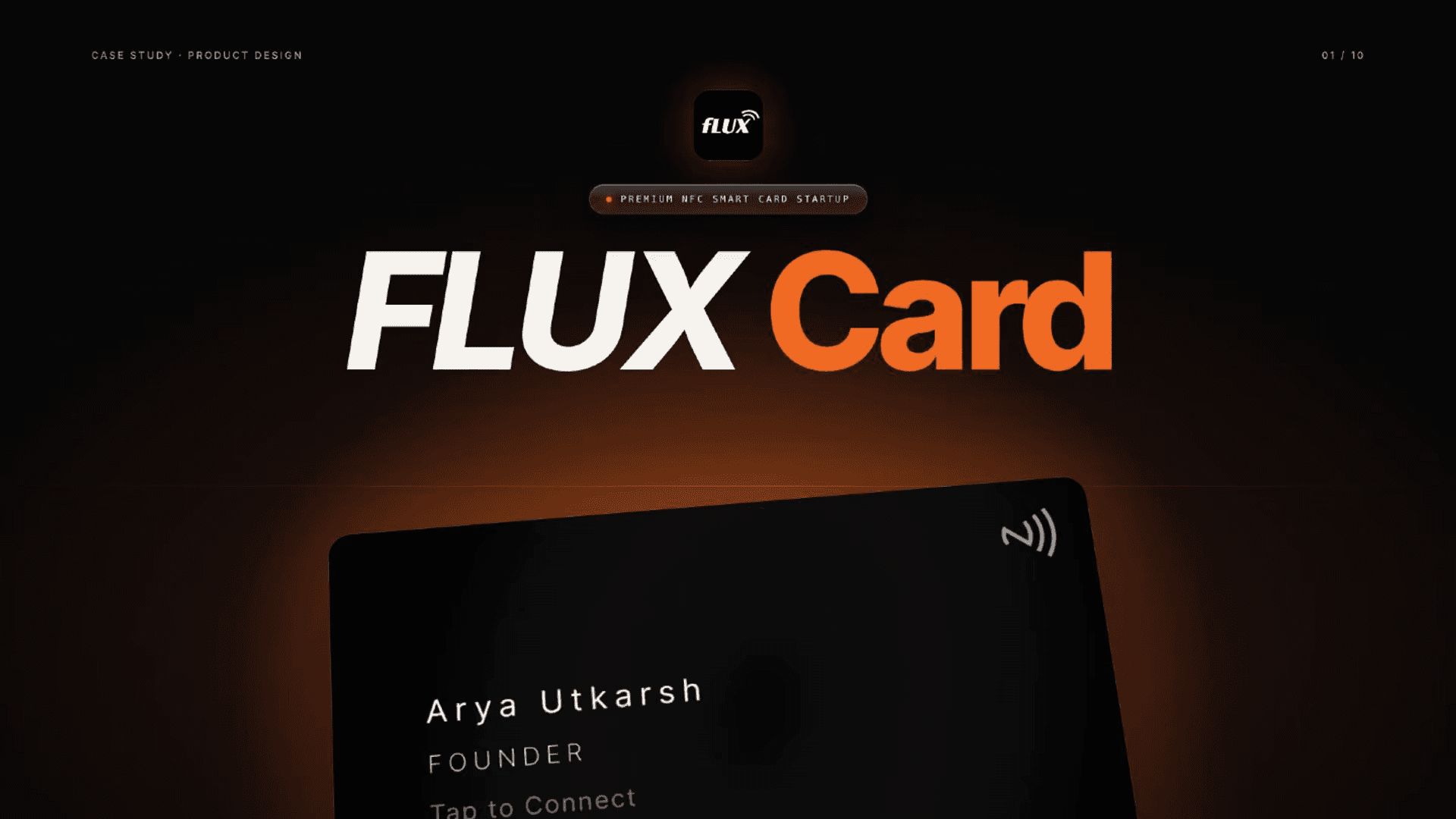
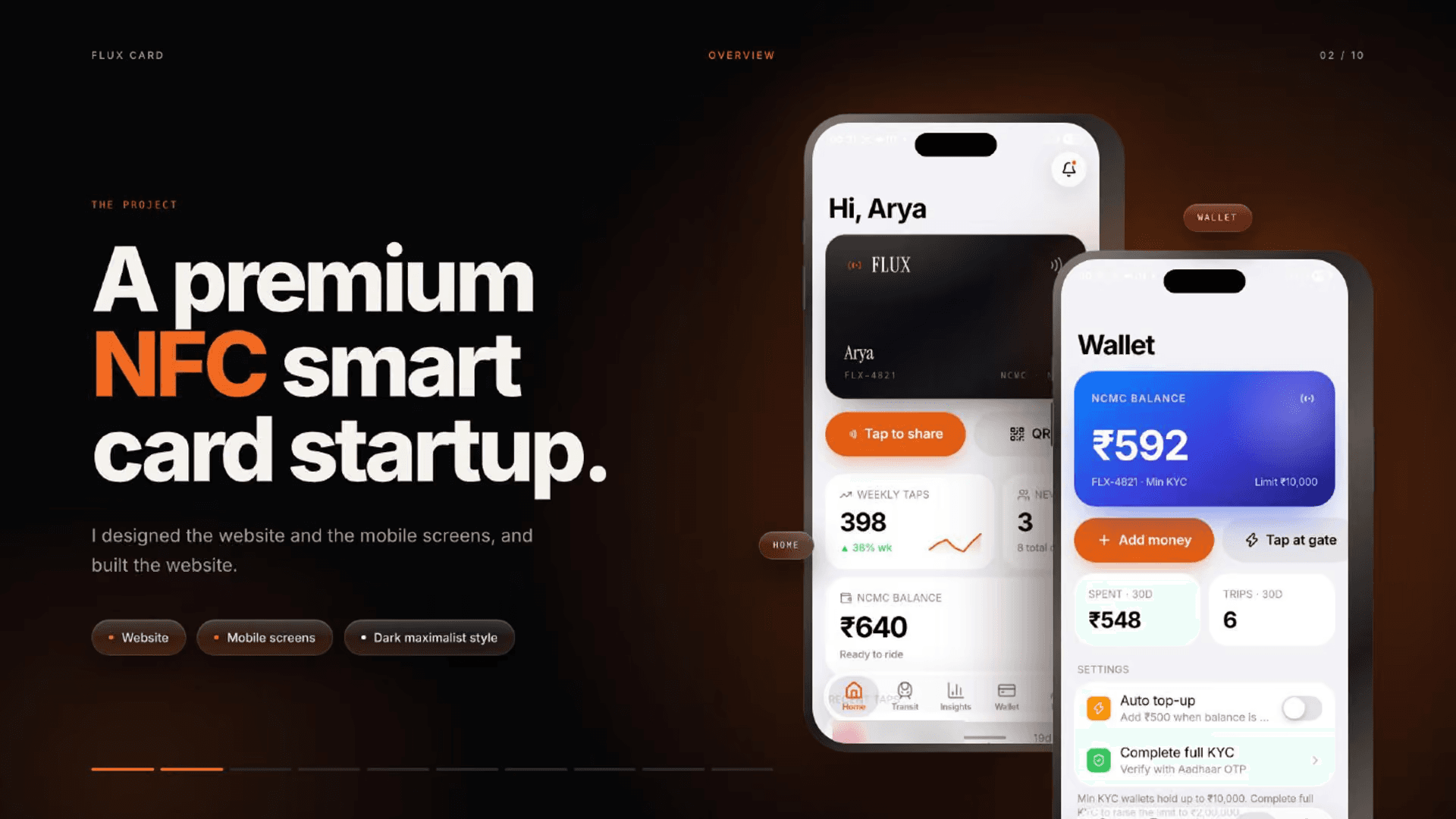
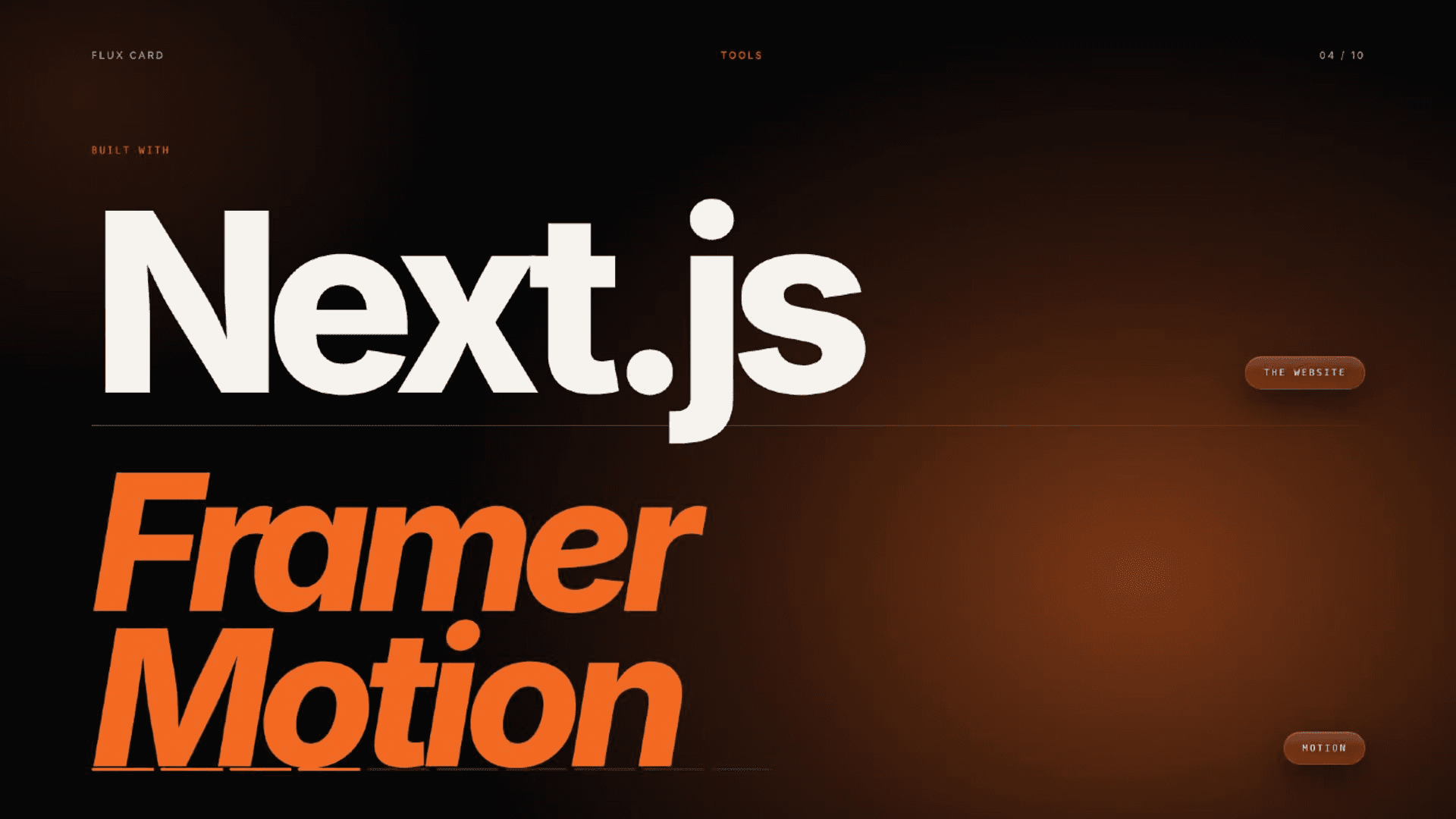
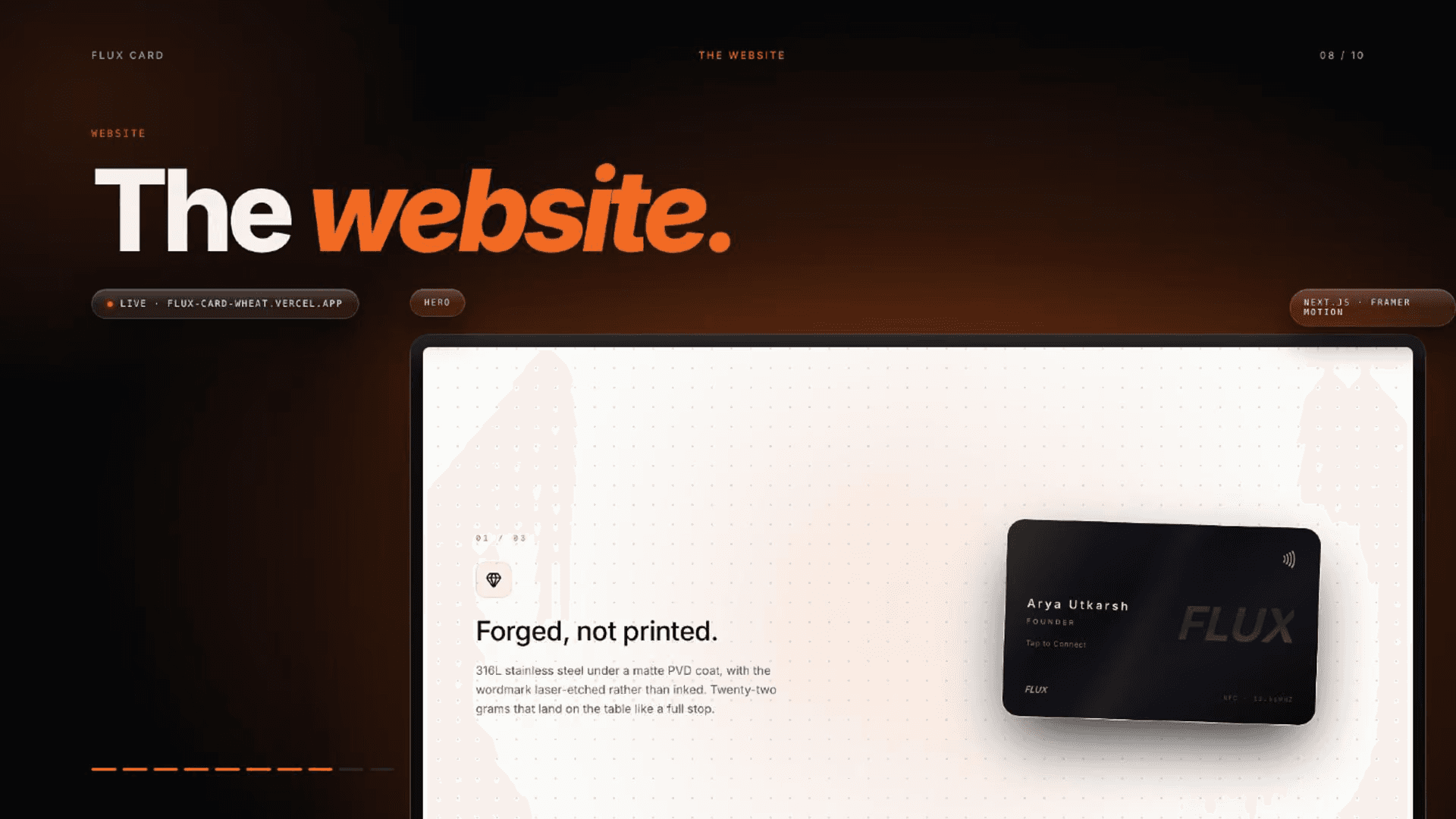
FLUX Card is an NFC smart card startup website. I designed the interface and built it in Next.js with Framer Motion.
My role
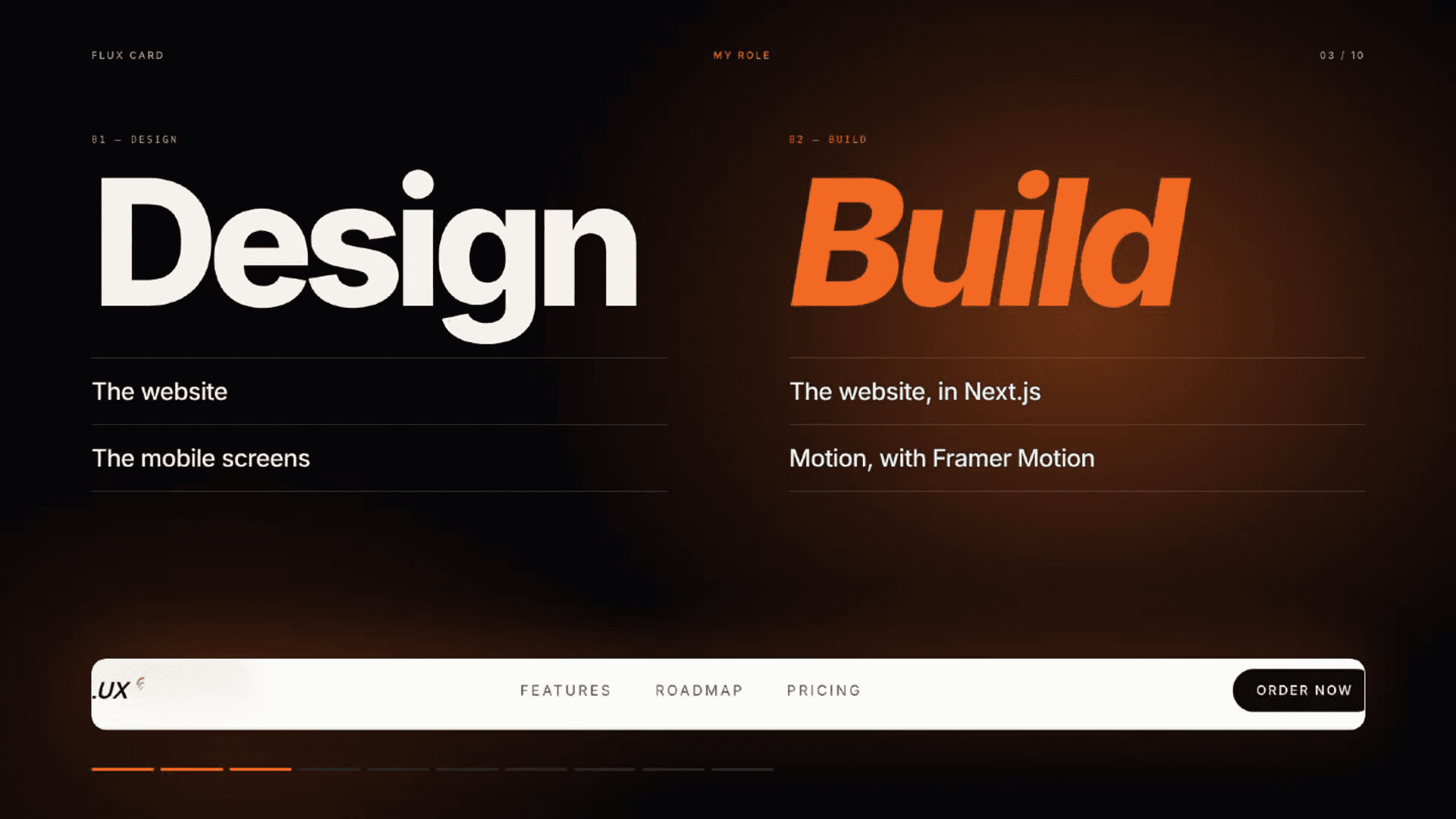
I owned both the visual design and the frontend build. That let me carry the dark maximalist direction directly into typography, motion and responsive behavior.
Problem
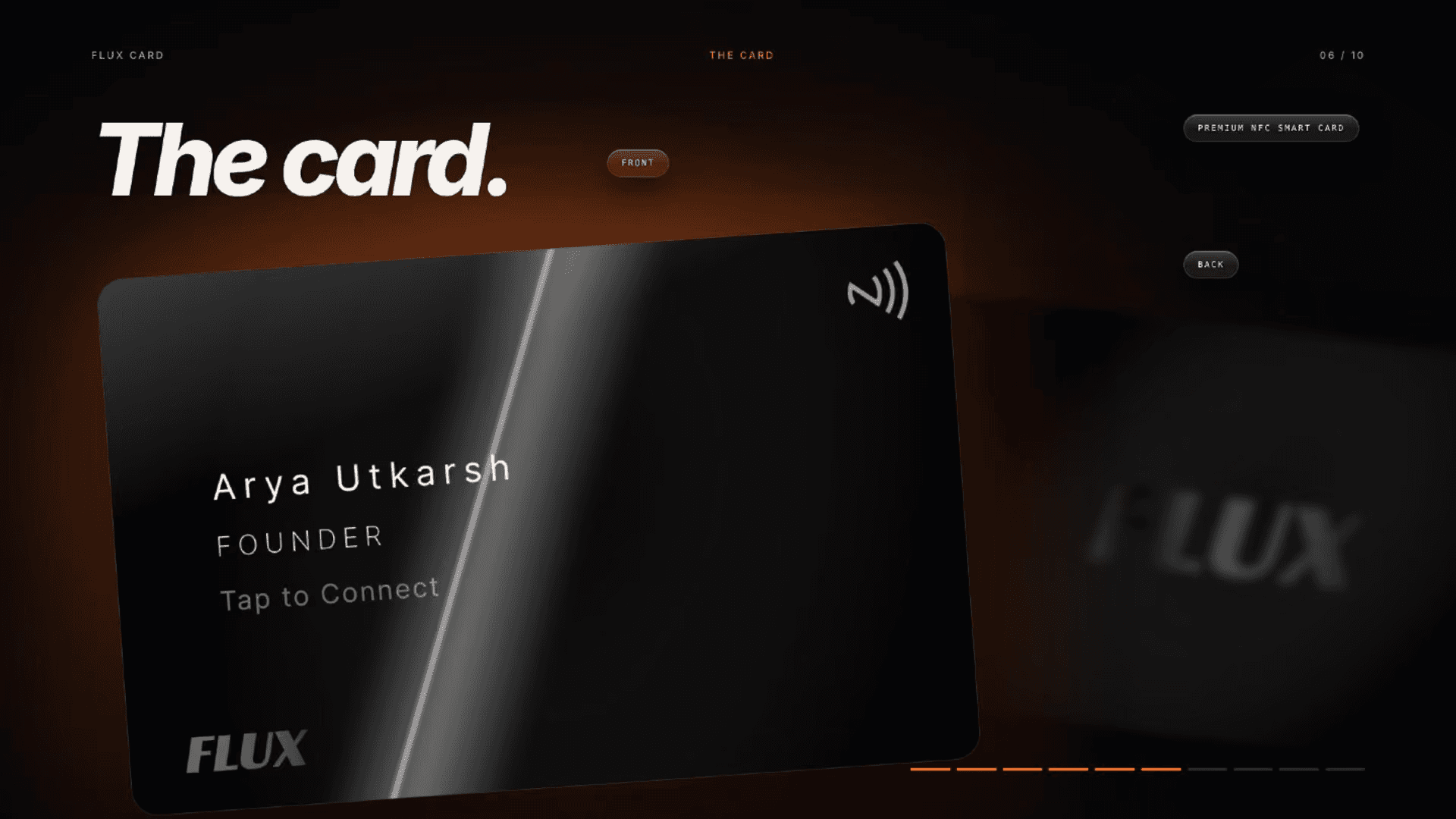
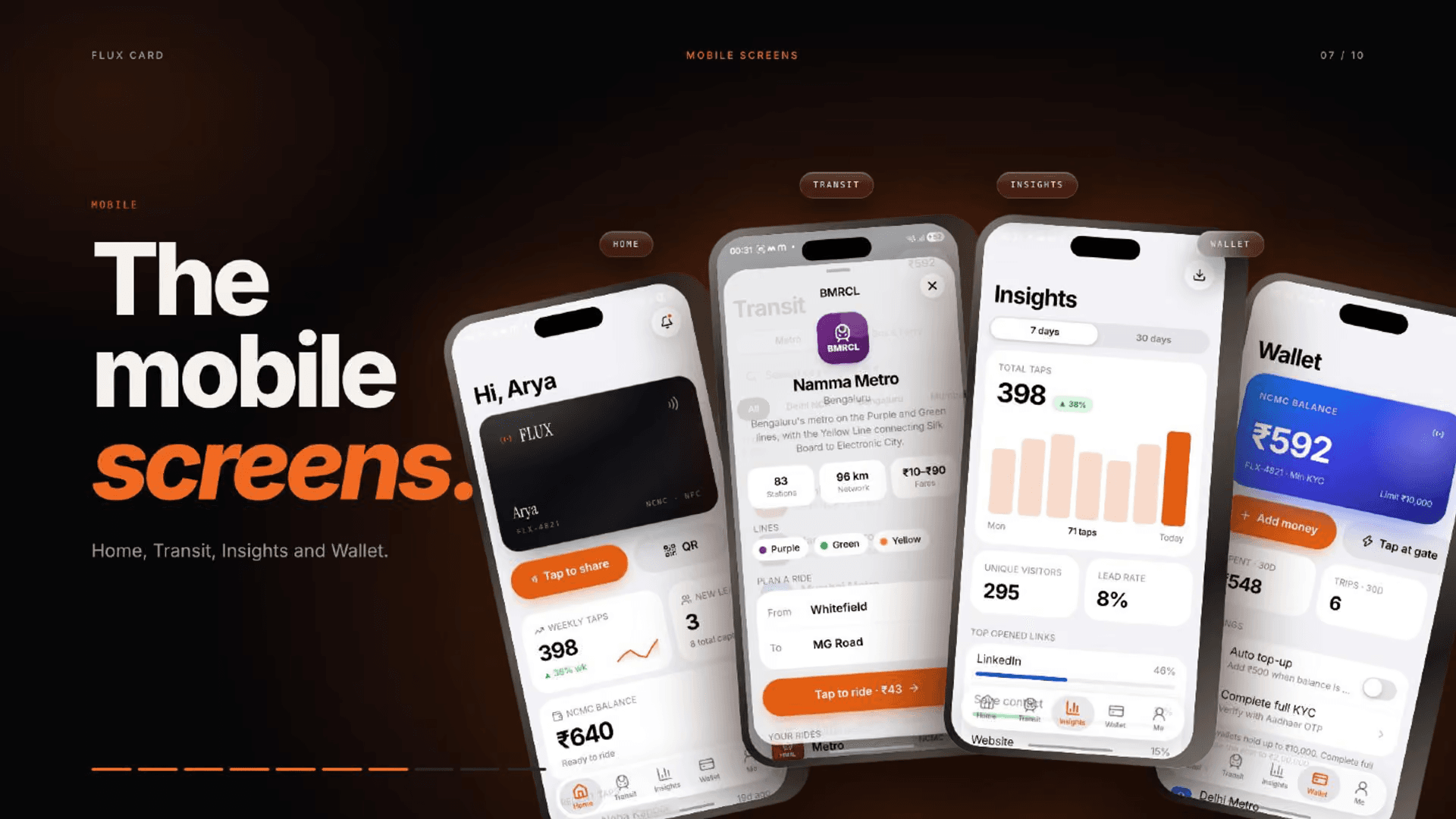
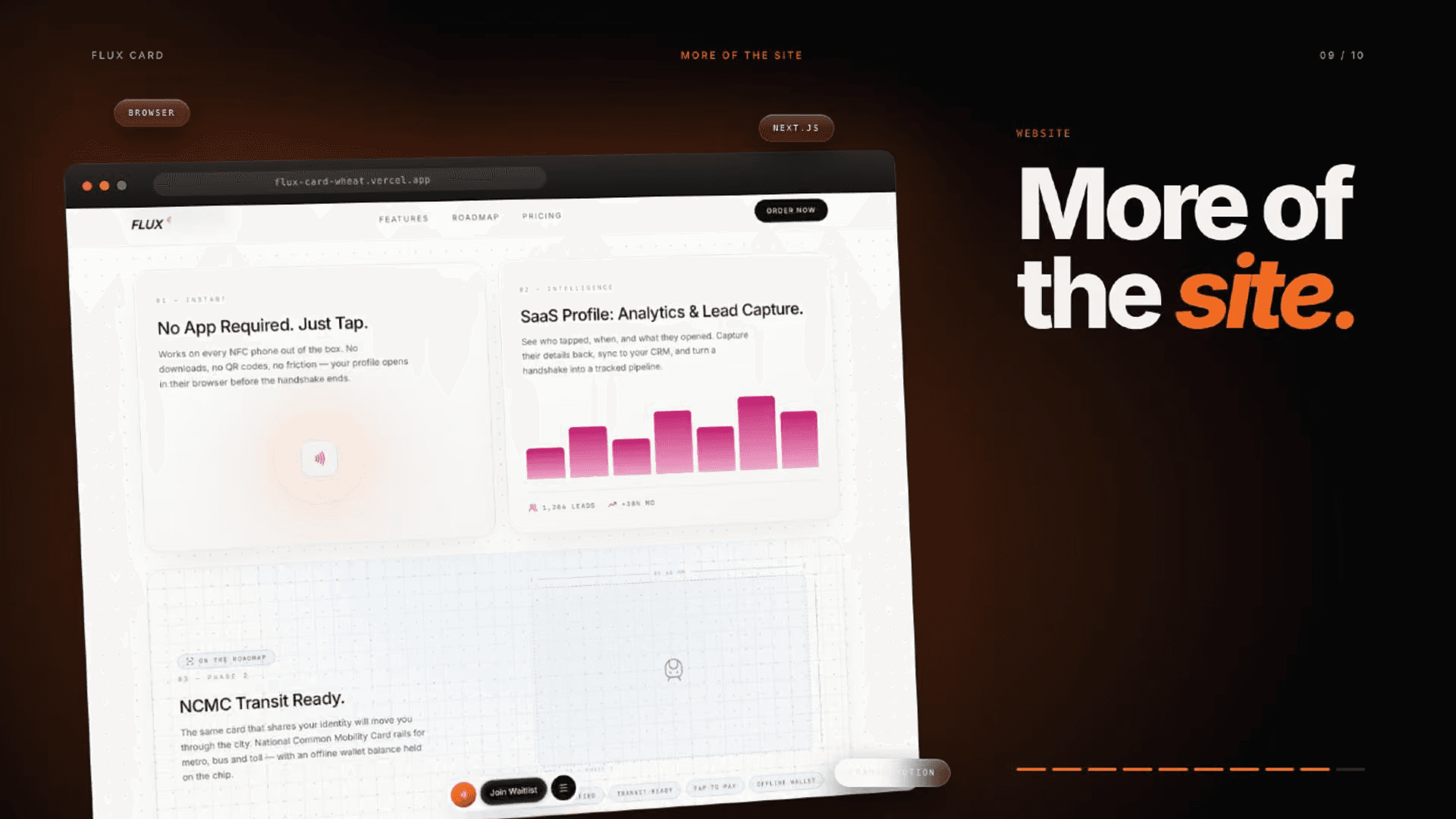
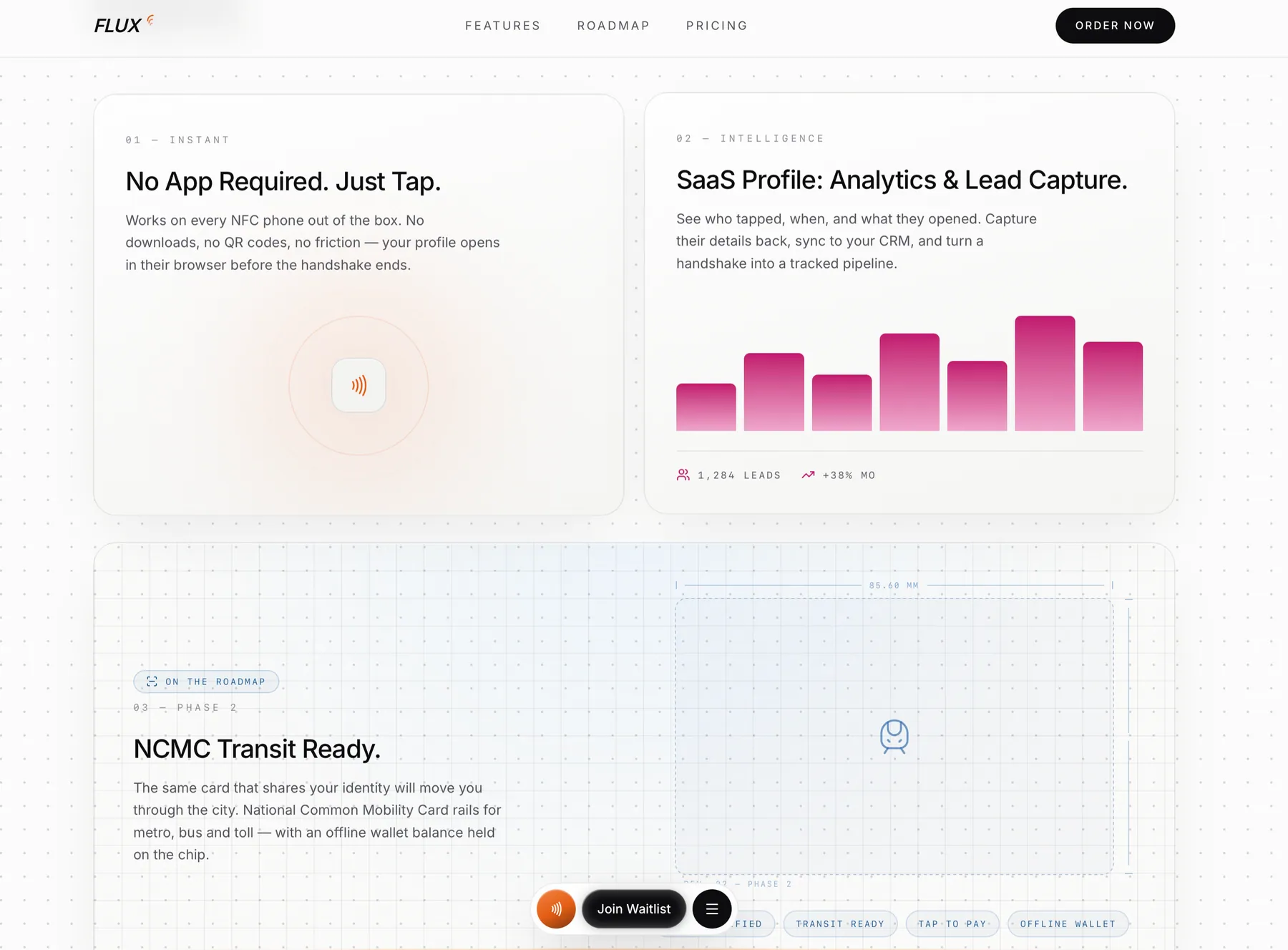
The site needed to introduce the physical card and explain the digital experience behind a tap. The supplied screens cover the card itself, the SaaS profile, analytics, lead capture and the product roadmap.
Process
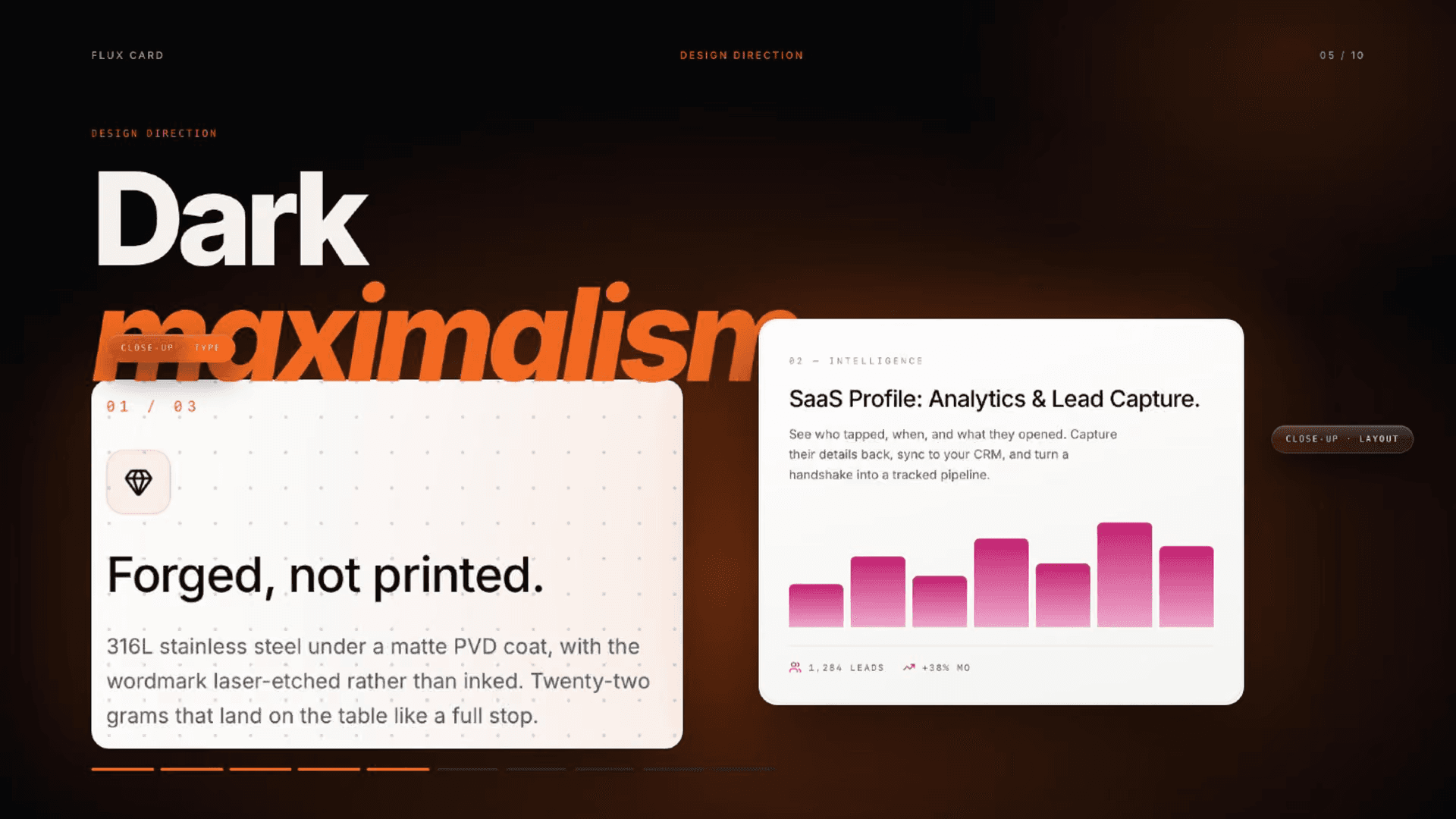
Dark maximalist visual direction
I used a dark maximalist style to make the card feel like the product rather than a generic web graphic. Large type and close product framing carry the first impression.
Design in the final medium
I implemented the site in Next.js and used Framer Motion for the interface motion, keeping the visual and interaction decisions in the same workflow.
Solution
From physical tap to digital follow-through
The product story moves from the card to what happens after a tap: a profile experience, analytics and lead capture. A roadmap section extends that story into the product’s next stages.
Result
I deployed the finished FLUX Card website live.